
SEO in the Age of AI: What Is Changing?
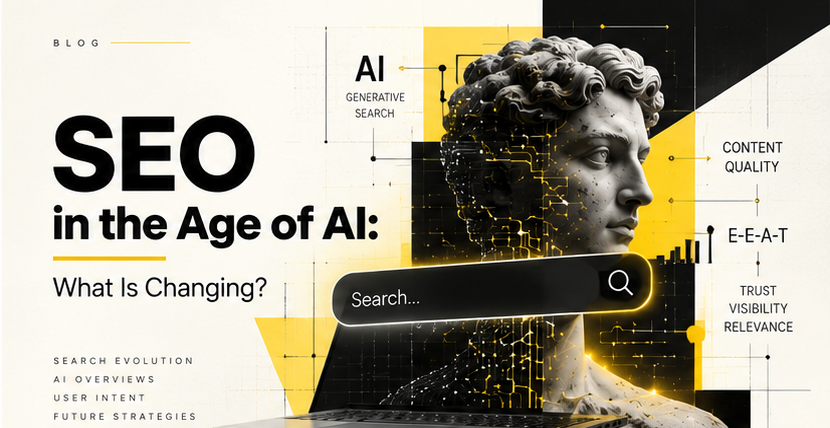
Category: SEO | Digital Strategy
Search engine optimisation is evolving. Artificial intelligence is changing how people discover information, how search engines present answers, and how businesses compete for online visibility.
But does AI mean SEO is becoming irrelevant?
Not at all. It means businesses need to think beyond rankings alone.
1. Search Is Becoming More Conversational
People increasingly use AI-powered tools to ask detailed questions, compare options, and explore complicated topics. Instead of searching only with short keywords, users may describe a problem in natural language and expect a useful answer.
For marketers, this makes understanding search intent more important than simply repeating keywords.
Content should answer real questions clearly, provide relevant context, and help readers make informed decisions.
2. Helpful Content Matters More Than Content Volume
AI tools can help marketers brainstorm topics, organise research, and create initial drafts. However, publishing large amounts of generic content is not a reliable shortcut to search visibility.
Content needs to offer something useful: original insight, practical examples, accurate information, clear explanations, or first-hand experience.
Use AI to support your process, not replace your judgement.
3. Trust and Expertise Still Matter
When people are choosing a service provider, comparing products, or researching a business, they need reasons to trust the information they find.
Businesses can strengthen that trust through:
Accurate and well-maintained website content.
Clear information about the business and its services.
Relevant case studies and genuine customer testimonials.
Author expertise and original insights.
Consistent information across important online platforms.
These practices help people evaluate your business and support a stronger online presence.
4. Technical SEO Is Still Important
A useful article cannot perform well if search engines struggle to discover or understand the website.
Technical foundations remain important, including crawlability, indexability, mobile usability, logical site structure, internal links, and appropriate page performance.
Structured data can also help search engines interpret eligible content, although it does not guarantee enhanced search results or AI citations.
5. How Businesses Can Adapt
If you want to strengthen your SEO strategy in the age of AI, start with these practical steps:
Research the real questions your target audience asks.
Create focused pages that answer those questions thoroughly.
Add original examples, expert knowledge, and useful details.
Keep your website technically accessible and easy to navigate.
Measure relevant outcomes using tools such as Google Search Console and Google Analytics 4.
Review content regularly and improve it based on user needs and performance.
For businesses in Saudi Arabia and across the Middle East, consider the language, location, and specific needs of your audience. Local relevance and accurate business information can be important parts of a broader search strategy.
The Future of SEO
AI is changing the search experience, but the underlying objective remains familiar: help people find relevant, trustworthy, useful information.
The strongest approach is not to chase every new feature. It is to build a solid SEO foundation, understand your audience, and use new technologies thoughtfully.
SEO is not simply about being found. It is about being useful when people find you.